A Reality Check for Generative Artificial Intelligence
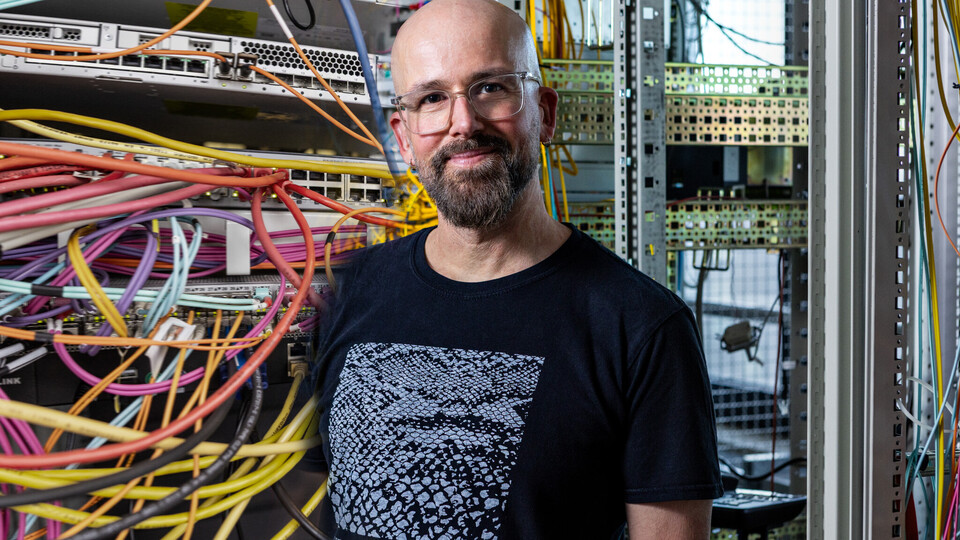
Prof. Paulheim lächelt in die Kamera. Neben ihm sind viele bunte Kabel zu sehen, die in verschiedenen Anschlüssen stecken.
Today, AI models pass examinations, write compelling texts, and often provide surprisingly good answers. But how can you determine which of the now numerous models is best suited for solving a specific task?
To determine this, so-called benchmarks are typically used. In this case, these are datasets that usually contain pairs of questions and answers for a specific problem. To perform evaluation and comparison of AI models, the questions from the benchmark are posed to them, and the percentage of correct answers is measured. Many of these tests are based on fixed collections of questions and answers that are publicly available on the web. Since AI models are trained using data from the web, an AI might already be familiar with such tasks from its training data and have “memorized” the correct answers, or it might have been specifically optimized to perform well on precisely these tests. In both cases, the AI model’s performance would be overestimated—the AI would then appear more capable than it actually is when tackling new, previously unknown problems. Paulheim’s new project addresses this issue: Instead of repeatedly using the same static test questions, tasks are to be generated anew at the very moment of examination. They are then evaluated and not reused.
The goal of the project is to design a flexible tool that can be used to develop and test such dynamic AI tests for various applications, thereby enabling a more realistic assessment of what generative AI is truly capable of. For researchers, companies, and public institutions, this would provide support in selecting suitable systems to determine which model can be entrusted with which task and where caution is warranted.
The research project is funded by the Vector Foundation with 100,000 euros over 1.5 years. The Vector Foundation is a corporate foundation based in Stuttgart. It supports projects in the areas of research, education, and social engagement in Baden-Württemberg.
This text was translated from German by DeepL.